
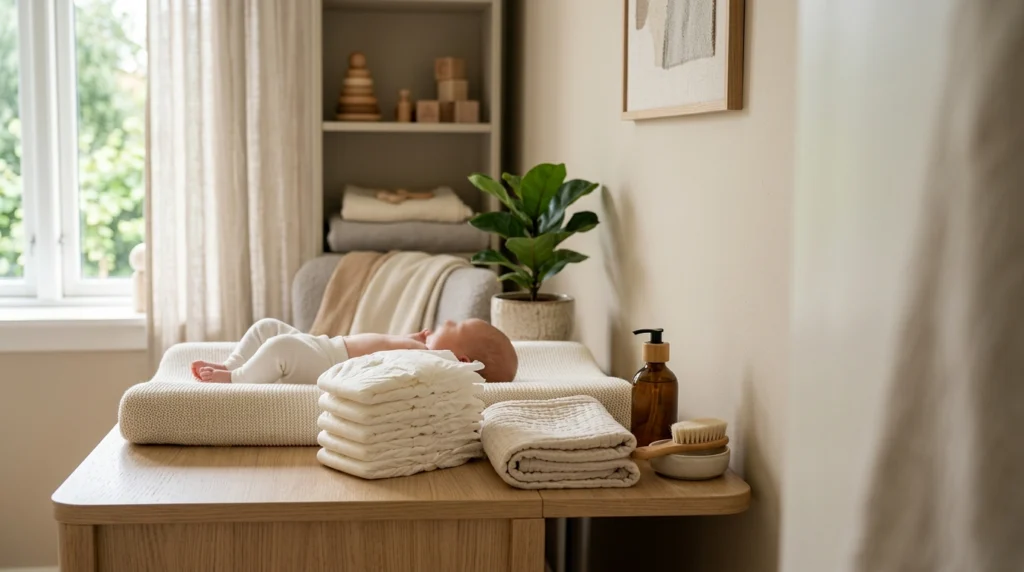
Finding a Gentle Diaper for Sensitive Baby Skin
Choosing a diaper sounds simple until your baby starts dealing with redness, irritation, leaks, or recurring diaper-area discomfort.
At that point, the diaper becomes much more than something that keeps clothes dry. It is sitting against your baby’s skin for hours at a time, sometimes overnight, so it makes sense to pay closer attention to the materials, added ingredients, fit, absorbency, and overall construction.
That is also why searches for the safest non-toxic diapers for sensitive skin have become increasingly common.
But there is one important thing to understand before comparing brands: “non-toxic” is not a regulated guarantee that a diaper is completely free from every potentially concerning substance. Different brands use the term differently. A more useful approach is to look at exactly what a diaper contains, what it leaves out, whether its claims are independently tested, and how well the diaper actually performs.
For sensitive skin, we particularly look for diapers that avoid common additions such as added fragrance and lotions, while also considering latex, dyes, phthalates, chlorine processing, certifications, and transparency.
In this guide, we compare 10 diaper options that stand out for different reasons. Some focus heavily on ingredient transparency, some on cotton or plant-derived materials, some on softness and absorbency, and others offer a more accessible option from a mainstream brand.
The goal isn’t to find one diaper that is magically perfect for every baby. The best diaper is the one that fits your baby properly, keeps moisture away from the skin, minimizes unnecessary irritants, and works reliably for your family’s routine.
Our Top Picks at a Glance
| Diaper | Best For | Sensitive-Skin Highlights | Price Level |
|---|---|---|---|
| HealthyBaby Our Diapers | Ingredient-conscious parents | EWG Verified, fragrance-free, TCF | Premium |
| Coterie The Diaper | Best premium overall | Hypoallergenic, dermatologist tested, fragrance-free | Premium |
| Kudos Diapers | Cotton next-to-skin feel | 100% cotton liner, fragrance-free, TCF | Premium |
| Bambo Nature | Eco-conscious families | Hypoallergenic, fragrance-free, eco certifications | Mid-Premium |
| EveryLife Diapers | Newborn and sensitive skin | Fragrance-free, latex-free, OEKO-TEX certified | Premium |
| Millie Moon Luxury Diapers | Softness | Fragrance-free, lotion-free, latex-free | Mid-Premium |
| Huggies Skin Essentials | Mainstream sensitive-skin option | Fragrance-free and sensitive-skin focused | Mid |
| Pampers Pure Protection | Easy mainstream upgrade | Fragrance-free, clean-leaning construction | Mid-Premium |
| Pura Baby Diapers | Eco-conscious value | Sensitive-skin positioning | Mid |
| Mama Bear Gentle Touch | Budget-conscious parents | Hypoallergenic, gentle-skin positioning | Budget |
Product specifications, certifications, and formulations can change, so always check the current manufacturer information before purchasing.
[affiliate_coupon id=”980″][affiliate_coupon id=”987″]
What Does “Non-Toxic” Actually Mean When It Comes to Diapers?
The term “non-toxic” sounds reassuring, but it can also be misleading if you don’t look beyond the label.
Disposable diapers are made from several different components. They can include an absorbent core, a topsheet that touches the skin, elastic materials, adhesives, an outer layer, and other components needed to make the diaper functional.
A diaper cannot realistically be described as “chemical-free.” Everything is made of chemicals in the scientific sense, including cotton and water.
What parents usually mean by “non-toxic” is something more practical:
- Fewer unnecessary additives
- No added fragrance
- No lotions
- No problematic dyes
- Reduced exposure to certain substances parents prefer to avoid
- Transparent material information
- Independent testing or credible certifications
- A skin-friendly construction
This is why we recommend looking at specific claims rather than relying on the phrase “non-toxic” alone.
For example, Coterie says its diapers are made without fragrance, parabens, latex, lotion, chlorine bleaching, rubber, alcohol, phthalates, and VOCs. The company also says its diapers are hypoallergenic, dermatologist tested, and independently tested.
Kudos takes a different approach, highlighting its 100% cotton liner and stating that its diapers are made without lotions and fragrances, as well as phthalates, chlorine, latex, and parabens.
HealthyBaby focuses heavily on ingredient transparency and third-party certifications. Current independent testing coverage also identifies HealthyBaby as an option for sensitive skin, with EWG verification, OEKO-TEX certification, fragrance-free construction, and Totally Chlorine-Free processing.
The important lesson is simple:
Don’t choose a diaper because the package says “clean.” Choose it because you understand what the manufacturer is actually claiming and, where possible, what independent testing or certification supports those claims.
What Makes a Diaper Good for Sensitive Skin?
Sensitive skin can react to several different things, and the cause isn’t always the diaper itself.
Heat, moisture, friction, frequent bowel movements, soaps, wipes, tight clothing, and prolonged contact with a wet or soiled diaper can all contribute to irritation.
A good sensitive-skin diaper should therefore do more than simply have a long “free from” list.
1. A Gentle Next-to-Skin Layer
The layer touching your baby’s skin matters.
Kudos is particularly interesting because the brand says its diapers use a 100% cotton liner rather than a plastic next-to-skin layer.
That doesn’t automatically mean cotton is better for every baby, but it gives parents another option if their child does not do well with a particular synthetic-feeling liner.
2. No Added Fragrance
Fragrance is one of the first things many parents look for when shopping for sensitive-skin products.
A fragrance-free diaper removes one unnecessary category of added ingredients from the equation.
Coterie, Kudos, EveryLife, Millie Moon, and several other options in this guide specifically advertise fragrance-free construction.
3. No Added Lotion
Some diapers use lotions or skin-conditioning ingredients as part of their design.
These aren’t automatically harmful, but if your baby has particularly reactive skin, choosing a diaper without added lotion can simplify the number of variables you are exposing the skin to.
4. Good Moisture Management
A diaper can have an impressive ingredient list and still be a poor choice if it leaves your baby’s skin wet.
Absorbency and moisture management are therefore just as important as ingredient considerations.
The objective is to pull urine away from the skin and hold it inside the absorbent core.
5. Correct Fit
Even a premium diaper can cause problems if the fit is wrong.
A diaper that is too tight can increase friction around the legs and waist. A diaper that is too loose may leak and leave more moisture against the skin.
Don’t automatically assume that a more expensive diaper will fit your baby better.
10 Safest Non-Toxic Diapers for Sensitive Skin
1. HealthyBaby Our Diapers — Best for Ingredient-Conscious Parents
HealthyBaby is one of the strongest options to consider if ingredient transparency and third-party verification are at the top of your list.
The brand’s diaper has received considerable attention for its ingredient-conscious positioning. Current product coverage identifies HealthyBaby as EWG Verified and OEKO-TEX certified, while also noting that it is fragrance-free and Totally Chlorine-Free.
Why We Like It
The biggest advantage is transparency.
Instead of simply saying a diaper is “clean,” HealthyBaby puts considerable emphasis on what goes into the product and which substances it avoids.
That makes it particularly attractive for parents who want to research materials before making a purchase.
The diaper is also positioned specifically for sensitive skin, and independent testing coverage has highlighted its performance with a baby experiencing particularly sensitive skin.
Best For
- Ingredient-conscious families
- Babies with sensitive skin
- Parents who value certifications
- Families willing to pay more for premium diapers
Potential Downsides
The main drawback is price.
HealthyBaby is positioned toward the premium end of the market. Some parents may also miss the absence of a wetness indicator, which can be useful for newborns and new parents.
Our Take
Best choice if ingredient transparency is your number-one priority.
2. Coterie The Diaper — Best Premium Overall
Coterie is a strong pick for parents who don’t want to choose between skin-conscious materials and performance.
The brand states that its diapers are made without fragrance, parabens, latex, lotion, chlorine bleaching, rubber, alcohol, phthalates, and VOCs. It also describes the diaper as hypoallergenic, dermatologist tested, and independently tested.
Coterie also publishes safety information rather than asking customers to rely entirely on marketing language. Its safety page says the diaper is certified to OEKO-TEX STANDARD 100 and tested for allergenicity and sensitization.
Why We Like It
Coterie’s biggest strength is balance.
Parents often want:
- Softness
- Absorbency
- Leak protection
- Gentle materials
- A comfortable fit
Coterie attempts to address all five.
That makes it a particularly strong choice for families who don’t want a diaper that is “clean” on paper but disappointing in everyday use.
Best For
- Premium diaper shoppers
- Sensitive skin
- Overnight use
- Parents prioritizing softness and absorbency
Potential Downsides
Premium performance usually comes with a premium price.
If you are buying diapers for multiple children or going through a large number of diapers every week, the cost can become significant.
Our Take
One of the strongest all-around choices for parents who want premium performance with extensive ingredient and testing information.
3. Kudos Diapers — Best Cotton Liner
Kudos stands out because of the material that sits against the baby’s skin.
The company says its diapers use a 100% cotton liner, rather than a plastic next-to-skin layer. It also states that the diapers are made without lotions and fragrances and are free from phthalates, chlorine, latex, and parabens.
Kudos also states that its diapers are OEKO-TEX STANDARD 100 certified and Total Chlorine Free.
Why We Like It
If your main concern is what physically touches your baby’s skin, Kudos deserves a close look.
The cotton liner is a meaningful point of differentiation.
It’s also useful for parents who have already tried several conventional disposable diapers and haven’t been happy with how the topsheet feels.
Best For
- Sensitive or reactive skin
- Parents specifically looking for a cotton liner
- Families avoiding fragrance and lotion
- Parents wanting disposable convenience
Potential Downsides
The cotton liner doesn’t mean the entire diaper is made of cotton.
Like other disposable diapers, it uses multiple materials to provide absorbency, structure, and leak protection.
Our Take
A particularly interesting option when the next-to-skin layer is your biggest concern.
4. Bambo Nature — Best Eco-Conscious Choice
Bambo Nature is worth considering for parents who want sensitive-skin credentials alongside a stronger environmental focus.
The brand has long positioned its diapers around hypoallergenic, fragrance-free construction and environmental certifications.
Independent 2026 comparisons list Bambo Nature among the stronger eco-oriented options, highlighting certifications such as the Nordic Swan Ecolabel and EU Ecolabel.
Why We Like It
Bambo Nature is a good example of why you don’t necessarily have to choose between skin-conscious design and environmental considerations.
For some families, the goal is not simply avoiding fragrance or lotions. They also want to understand how the product is manufactured and what environmental standards it meets.
Best For
- Eco-conscious families
- Sensitive skin
- Parents who value certifications
- Families looking beyond mainstream diaper brands
Potential Downsides
Availability can be more limited depending on where you live, and the price may be higher than mainstream diapers.
Our Take
A solid choice for families who want sensitive-skin features and environmental credentials in the same product.
5. EveryLife Diapers — Best for Newborns and Sensitive Skin
EveryLife is another premium diaper worth considering.
The brand says its diapers are made without fragrances, dyes, lotions, latex, parabens, and phthalates. It also says its diapers are OEKO-TEX STANDARD 100 certified.
The company specifically describes its diapers as suitable for newborns and babies with sensitive skin.
Why We Like It
The extensive “free from” list makes EveryLife easy for parents to evaluate.
Instead of trying to decode a vague clean-beauty-style claim, you can look at the specific ingredients the company says it excludes.
EveryLife also states that its certification tests components against more than 1,000 harmful substances.
Best For
- Newborns
- Sensitive skin
- Ingredient-conscious parents
- Premium diaper shoppers
Potential Downsides
It is not the cheapest option, particularly for families who use several diapers every day.
Our Take
A strong premium choice if certifications and a straightforward “free from” list matter to you.
6. Millie Moon Luxury Diapers — Best for Softness
Millie Moon focuses heavily on softness.
The manufacturer says its luxury diapers are dermatologist tested and made with 0% lotions, latex, and fragrance. It also highlights a high-GSM topsheet designed to wick moisture away from the skin.
Why We Like It
Softness can be a major consideration for babies with sensitive skin.
A diaper that feels stiff or rough may increase discomfort, especially around the legs and waist.
Millie Moon’s CloudTouch construction is designed specifically around a softer feel, and the brand reports survey results showing strong parent preference for that softness.
Best For
- Babies who dislike stiff diapers
- Parents prioritizing softness
- Sensitive skin
- Families looking for a premium-feeling diaper without going to the highest price tier
Potential Downsides
Fit varies from baby to baby.
A soft diaper still needs to match your child’s body shape, and what works beautifully for one baby may not fit another as well.
Our Take
A good choice when softness is your main priority.
7. Huggies Skin Essentials — Best Mainstream Sensitive-Skin Option
Not every parent wants a niche subscription diaper.
Sometimes you want something you can pick up easily during a normal shopping trip.
That’s where Huggies Skin Essentials becomes interesting.
The product is specifically positioned around sensitive skin and fragrance-free construction, making it an accessible option for parents who want to make a change without moving completely into premium specialty brands.
Independent 2026 comparisons also list Huggies Skin Essentials among the mainstream choices for sensitive skin.
Why We Like It
Availability is a major advantage.
If your baby suddenly runs out of diapers or you are traveling, being able to find a suitable product locally can be more useful than having the “perfect” diaper that requires planning.
Best For
- Mainstream shoppers
- Sensitive skin
- Parents who want easy availability
- Families transitioning from conventional diapers
Potential Downsides
Ingredient-conscious specialty brands may provide more extensive transparency or certifications.
Our Take
A practical option for parents who want sensitive-skin features without committing to a niche premium brand.
8. Pampers Pure Protection — Best Mainstream Clean-Leaning Option
Pampers Pure Protection is another mainstream option for parents looking for a more sensitive-skin-focused diaper.
Independent 2026 comparisons identify it as a fragrance-free, clean-leaning mainstream option.
Why We Like It
The biggest advantage is accessibility.
Pampers is widely available, so parents can often find Pure Protection without ordering online.
That makes it useful for families who want a fragrance-free option while remaining with a familiar mainstream manufacturer.
Best For
- Mainstream shoppers
- Families wanting fragrance-free diapers
- Parents who value availability
- Babies who don’t need an ultra-specialized premium diaper
Potential Downsides
It may not provide the same level of material differentiation or ingredient transparency as some premium specialty options.
Our Take
A convenient step up for parents who want a mainstream fragrance-free option.
9. Pura Baby Diapers — Best Eco-Conscious Alternative
Pura Baby is another option for families interested in sensitive-skin and environmentally conscious diapering.
The brand is often included among planet-friendlier diaper options, and current 2026 comparisons position Pura Baby as a sensitive-skin choice with an eco angle.
Why We Like It
Pura is worth considering if you want to balance skin sensitivity with environmental priorities without automatically choosing the most expensive diaper on the market.
Best For
- Eco-conscious families
- Sensitive skin
- Parents looking for alternatives to major brands
Potential Downsides
Availability and exact pricing can vary significantly by retailer and location.
Our Take
A useful alternative for parents who want a more environmentally conscious option.
10. Mama Bear Gentle Touch — Best Budget-Friendly Pick
Premium diapers are not realistic for every family.
If you’re changing several diapers every day, the difference in price per diaper can quickly become a meaningful monthly expense.
Mama Bear Gentle Touch is worth considering when affordability is a major priority.
Current 2026 comparisons identify it as a budget-friendly option with a gentle-on-skin positioning.
Why We Like It
The biggest benefit is value.
You don’t necessarily need to spend premium-brand prices to find a diaper that works well for your baby.
Best For
- Budget-conscious families
- Everyday use
- Parents looking for an affordable gentle option
Potential Downsides
Premium specialty diapers may offer more detailed ingredient transparency, specialized certifications, or a more premium feel.
Our Take
A sensible starting point if your priority is keeping the cost manageable while still looking for a gentle everyday diaper.
Non-Toxic Diapers Comparison Table
| Diaper | Fragrance-Free | Sensitive-Skin Focus | Notable Certification/Testing | Best For |
| HealthyBaby | Yes | Strong | EWG Verified, OEKO-TEX | Ingredient transparency |
| Coterie | Yes | Strong | OEKO-TEX, dermatologist tested | Premium overall |
| Kudos | Yes | Strong | OEKO-TEX | Cotton liner |
| Bambo Nature | Yes | Strong | Nordic Swan, EU Ecolabel | Eco-conscious families |
| EveryLife | Yes | Strong | OEKO-TEX | Newborn/sensitive skin |
| Millie Moon | Yes | Strong | Dermatologically tested | Softness |
| Huggies Skin Essentials | Yes | Strong | Brand/product testing | Mainstream convenience |
| Pampers Pure Protection | Yes | Moderate-Strong | Product-specific claims | Mainstream option |
| Pura Baby | Product dependent | Strong | Product-specific credentials | Eco-conscious shoppers |
| Mama Bear Gentle Touch | Product dependent | Moderate | Product-specific claims | Budget |
Note: Product formulations, certifications, and retailer availability can change. Verify the current product packaging and manufacturer documentation before purchase.
Ingredients and Features Parents May Want to Avoid
When shopping for a diaper for sensitive skin, it is easy to become overwhelmed by long ingredient lists.
You don’t need to memorize every chemical name.
Instead, start with a few categories.
Added Fragrance
Fragrance is one of the simplest things to avoid if your baby has reactive skin.
A fragrance-free diaper reduces the number of added substances that may potentially irritate sensitive skin.
Lotions
Some diapers contain lotion or conditioning ingredients.
These aren’t automatically problematic, but if your baby’s skin is easily irritated, a simpler formulation may be worth trying.
Latex
Latex is another material some parents prefer to avoid, particularly when choosing products for sensitive skin.
Several diapers in this guide, including Coterie, Kudos, EveryLife, and Millie Moon, state that they are made without latex.
Dyes and Added Colorants
Some parents prefer diapers with fewer unnecessary dyes.
However, don’t assume that the absence of a particular ingredient automatically makes one diaper medically safer than another.
Look at the entire product and your baby’s response.
Phthalates and Parabens
These are ingredients many ingredient-conscious families specifically look for on a “free from” list.
Coterie, Kudos, and EveryLife all publish claims about avoiding these substances in their diapers.
Chlorine Processing
Parents may also come across terms such as:
- Chlorine-free
- Elemental Chlorine Free (ECF)
- Totally Chlorine Free (TCF)
These terms aren’t interchangeable.
For example, TCF indicates a different bleaching process from ECF. If this matters to you, check the manufacturer’s exact wording rather than assuming “chlorine-free” means the same thing across every product.
How to Choose the Right Diaper for Sensitive Skin
Finding the right diaper doesn’t have to involve buying ten boxes at once.
A better approach is to narrow your options first.
Step 1: Start With Fragrance-Free
If your baby has sensitive skin, fragrance-free is an easy starting point.
There is no major advantage to added fragrance in a diaper, so removing it simplifies the product.
Step 2: Look at the Next-to-Skin Layer
Ask:
What actually touches my baby’s skin?
This is where products such as Kudos stand out because of their 100% cotton liner.
Step 3: Check Certifications
Certifications can provide another layer of confidence.
OEKO-TEX STANDARD 100, for example, is used by several diaper brands featured in this article.
But don’t assume that one certification means a product is superior in every category.
A certification tells you something specific about the product or materials. It doesn’t replace evaluating fit, absorbency, softness, or overall performance.
Step 4: Prioritize Fit
Try a small quantity first.
Check the baby’s legs and waist after wearing the diaper.
You want:
- No deep red marks
- No obvious gaps
- No frequent leaks
- No excessive rubbing
- Comfortable movement
Step 5: Pay Attention to Moisture
If the diaper frequently feels saturated or your baby’s skin remains wet, another product may work better.
Sensitive skin generally benefits from minimizing prolonged moisture exposure.
Step 6: Don’t Ignore the Wipes
A parent can switch to an expensive fragrance-free diaper and then use heavily fragranced wipes.
If irritation continues, consider the entire diapering routine rather than blaming the diaper alone.
Disposable vs. Cloth Diapers for Sensitive Skin
There is no universal winner.
Cloth diapers appeal to some families because they allow parents to control the fabric that touches the skin and can reduce reliance on disposable materials.
Disposable diapers, however, are highly convenient and can provide excellent absorbency.
For sensitive skin, the more important questions are:
- Is the material comfortable?
- Is the diaper changed frequently?
- Does it keep moisture away from the skin?
- Does the detergent or cleaning routine irritate the skin?
- Does the diaper fit correctly?
A poorly washed cloth diaper can cause irritation just as a poorly fitting disposable diaper can.
Choose the system that you can use consistently and comfortably.
How to Reduce Diaper-Related Skin Irritation
A good diaper is only one part of the equation.
HealthyChildren.org from the American Academy of Pediatrics recommends practical measures such as frequent diaper changes, gentle cleaning, and allowing the skin to dry. It also discusses the use of protective diaper creams when needed.
A few everyday habits can help:
Change Wet or Soiled Diapers Promptly
Don’t wait until the diaper is completely full.
More time in a wet or soiled diaper means more opportunity for irritation.
Clean Gently
Avoid aggressive rubbing.
Use gentle cleaning methods appropriate for your baby’s skin.
Let the Area Dry
Before putting on a fresh diaper, give the skin a moment to dry when practical.
Avoid Over-Tightening
A diaper should be secure but not excessively tight.
Consider a Barrier Cream
If your pediatrician recommends one, a suitable barrier cream can help protect irritated skin.
Watch for Persistent Problems
If a rash is severe, persistent, worsening, spreading, blistering, bleeding, or accompanied by other concerning symptoms, talk with your child’s pediatrician rather than simply changing diaper brands repeatedly.
Are Non-Toxic Diapers Worth the Higher Price?
This depends on what matters most to your family.
Premium diapers can cost substantially more, but they may offer things that some parents value:
- More ingredient transparency
- Independent testing
- Certifications
- Softer materials
- Specialized sensitive-skin positioning
- Better absorbency
- Subscription convenience
However, expensive does not automatically mean better for your baby.
A budget diaper that fits properly and causes no irritation can be a better choice for your family than an expensive diaper that doesn’t fit well.
The smartest approach is to compare the features that matter to you instead of paying for a “premium” label.
Which Diaper Should You Choose?
If you’re still unsure, here’s a simpler way to narrow it down.
Choose HealthyBaby if:
You care most about ingredient transparency and certifications.
Choose Coterie if:
You want a premium all-around diaper with a strong combination of softness, absorbency, and sensitive-skin positioning.
Choose Kudos if:
The material touching your baby’s skin is your biggest concern and you specifically want a cotton liner.
Choose Bambo Nature if:
Environmental certifications are an important part of your purchasing decision.
Choose EveryLife if:
You want a premium diaper with a detailed “free from” list and OEKO-TEX certification.
Choose Millie Moon if:
Softness is your top priority.
Choose Huggies Skin Essentials if:
You want something widely available with a mainstream sensitive-skin focus.
Choose Pampers Pure Protection if:
You want a familiar mainstream brand with a fragrance-free option.
Choose Pura Baby if:
You want to balance sensitive-skin considerations with environmental priorities.
Choose Mama Bear Gentle Touch if:
Price is the biggest factor.
Frequently Asked Questions
What are the safest non-toxic diapers for sensitive skin?
There isn’t one diaper that can be called the universally safest option for every baby.
HealthyBaby, Coterie, Kudos, Bambo Nature, and EveryLife are among the strongest options to investigate because they provide detailed information about materials, ingredients, testing, or certifications.
The best choice ultimately depends on your baby’s skin, body shape, and tolerance.
Are fragrance-free diapers better for sensitive skin?
Fragrance-free diapers are often a sensible choice when you’re trying to minimize potential irritants.
They don’t guarantee that a diaper will work for every baby, but removing added fragrance can simplify the product.
What is the best diaper for babies prone to diaper rash?
There is no single diaper that prevents diaper rash in every baby.
Look for a diaper that fits properly, manages moisture effectively, and avoids ingredients your child appears to react to.
Frequent diaper changes and gentle cleaning are also important parts of a rash-prevention routine.
Are chlorine-free diapers safer?
“Chlorine-free” is a manufacturing claim rather than a guarantee that a diaper is universally safer.
If this is important to you, look at the exact claim, such as TCF or ECF, and consider the entire product rather than one characteristic.
Are organic diapers automatically better?
No.
“Organic” can describe a particular material or component, but it doesn’t automatically tell you how absorbent the diaper is, what other materials it contains, or whether it will work well for your baby’s skin.
Look at the full construction.
What ingredients should I avoid in baby diapers?
Many ingredient-conscious parents start by looking for diapers without added fragrance, lotions, latex, dyes, parabens, and phthalates.
However, individual babies can react differently, so don’t assume that every ingredient on a “free from” list is a problem for every child.
Can diapers cause skin irritation?
Yes, diaper-area irritation can occur for several reasons, including prolonged moisture, friction, contact with stool or urine, product ingredients, and an improper fit.
If irritation keeps returning, consider the whole diapering routine.
Is a cotton diaper liner better for sensitive skin?
A cotton liner can be appealing because it provides a different next-to-skin experience.
Kudos, for example, uses a 100% cotton liner.
But “better” is personal. Your baby’s skin and the diaper’s overall moisture management still matter.
Are premium non-toxic diapers worth the money?
They can be, especially if you value certifications, ingredient transparency, softness, or premium absorbency.
But you don’t need to buy the most expensive diaper to care for sensitive skin.
Start with fit and your baby’s actual response.
Should I switch diapers if my baby develops a rash?
You can consider trying a different diaper, particularly if you suspect an ingredient or fit issue.
However, don’t assume the diaper is always the cause.
If the rash is persistent, severe, worsening, or unusual, consult your pediatrician.
Final Verdict
The search for the safest non-toxic diapers for sensitive skin can quickly become overwhelming because every parent wants to make the right choice.
The good news is that you don’t need to find a diaper with the longest list of “free from” claims.
Instead, focus on the fundamentals.
Choose a diaper with transparent product information, consider fragrance-free and lotion-free options, pay attention to what touches the skin, look for credible testing or certifications, and most importantly, make sure the diaper fits your baby properly.
For ingredient-conscious families, HealthyBaby is one of the most compelling options.
For an overall premium experience, Coterie is a strong choice.
For parents specifically interested in a cotton liner, Kudos deserves a close look.
Bambo Nature is appealing for eco-conscious families, while EveryLife offers another premium option with extensive “free from” claims and OEKO-TEX certification.
If softness is the priority, Millie Moon is worth considering. And if accessibility or budget matters more, mainstream options such as Huggies Skin Essentials, Pampers Pure Protection, and Mama Bear Gentle Touch can make sense.
Most importantly, remember that “non-toxic” isn’t a magic label.
The right diaper is the one that combines a thoughtful material profile with reliable absorbency, a comfortable fit, and good results for your individual baby.
Start with a small pack, observe how your baby’s skin responds, and adjust from there.
You May Also Like
Looking for more practical ways to make the most of limited space at home? Explore our guide to Best Compact Air Fryers for Small Kitchens and discover more ideas in our guide to Space-Saving Kitchen Appliances.